As parents, we spend so much energy trying to teach our children how to manage big feelings. We look for the right words, the right books, the right consequences. But the real teaching doesn’t happen in the moment of correction. It happens in the quiet, ordinary moments when they are watching us be human.
Children do not learn emotional regulation from lectures. They learn it from observation. They study our tone when we are frustrated, our body language when we are hurt, our reactions when plans fall apart. Long before a child can name their emotions, they are absorbing ours. The nervous system of a child is shaped by the emotional climate of the home. When parents struggle with their own regulation, relationship therapy offers a space to explore and heal those patterns.
What Does Emotional Regulation Actually Look Like?
Regulation does not mean being calm all the time. It does not mean never raising your voice or never feeling overwhelmed. It means having the capacity to experience a feeling without becoming consumed by it. When a parent can pause in the middle of frustration and say, “I’m feeling overwhelmed right now, I need a minute,” something powerful is transmitted. When a parent circles back after yelling and says, “I was frustrated, but I shouldn’t have spoken that way. I’m sorry,” repair becomes part of the emotional language of the family.
In those moments, children learn that emotions are real, but they are not dangerous. They learn that feelings move. They learn that connection can survive conflict. That is emotional safety.
Can Vulnerability Make You a Stronger Parent?
There is a common belief that strong parenting requires emotional invulnerability. Many adults grew up thinking that being the stable one meant never letting anyone see their internal world. But real strength in a home is not emotional perfection. It is an emotional responsibility. It is the ability to acknowledge what is happening inside without collapsing into it or placing it onto others.
Vulnerability, when done in a grounded way, builds trust. It might sound like a parent saying, “I feel sad today, but I can handle it,” or “I had a hard day, so I’m going to take a little quiet time.” This kind of sharing does not burden a child. Instead, it teaches them that feelings are manageable and that adults take responsibility for their own emotional states. The child learns that big feelings do not mean the world is unstable. They learn that emotions can be expressed without exploding or shutting down.
How Your Emotional Patterns Shape Your Child’s Future Relationships
This is where intimacy begins. Intimacy is not just a romantic concept. At its core, intimacy is the experience of being known and staying connected. When children grow up in homes where emotions are acknowledged and spoken about openly, they internalize a sense of safety around their inner world. They learn that they can feel deeply and still belong. They learn that conflict does not equal rejection. And they learn that closeness does not require pretending.
On the other hand, when emotions are dismissed or minimized, children adapt. If sadness is met with “you’re fine,” they may learn to disconnect from their sadness. If anger is met with punishment without understanding, they may either suppress it or express it in explosive ways later. Should vulnerability be mocked, they may armor themselves. These adaptations often follow them into adulthood, shaping how they show up in friendships, partnerships, and parenting their own children. The way we handle our emotions teaches our children what to do with theirs. But it also teaches them what to expect from relationships.
What Do Boundaries Teach Children About Emotions?
Boundaries are an essential part of this lesson. Boundaries are often misunderstood as harsh or rigid, yet healthy boundaries are actually an extension of emotional regulation. When a parent can say calmly, “I will not let you speak to me that way,” or “It’s okay to be angry, but it’s not okay to hit,” they are modeling strength without aggression. They are showing that feelings are welcome, but harmful behavior is not.
This distinction is crucial. A child must learn that emotions are valid while certain actions are limited. When boundaries are set with steadiness rather than shame, children experience containment instead of rejection. They feel the firmness, but they also feel the relationship holding steady around them.
Why Congruence Matters More Than Perfection
What makes this work is congruence. If a parent demands respect but regularly loses control, the lesson becomes confusing. If a parent encourages emotional expression but shuts down when confronted, the child senses the inconsistency. Modeling emotional regulation means doing the internal work to align what we ask of our children with how we treat ourselves and others.
This does not require perfection. In fact, imperfection paired with repair may be the most powerful teacher of all. When we acknowledge our missteps, we normalize growth. When we apologize, we demonstrate humility. Lastly, when we regulate ourselves before addressing our child’s behavior, we communicate that self-control is a responsibility, not a demand placed only on the small people in the house.
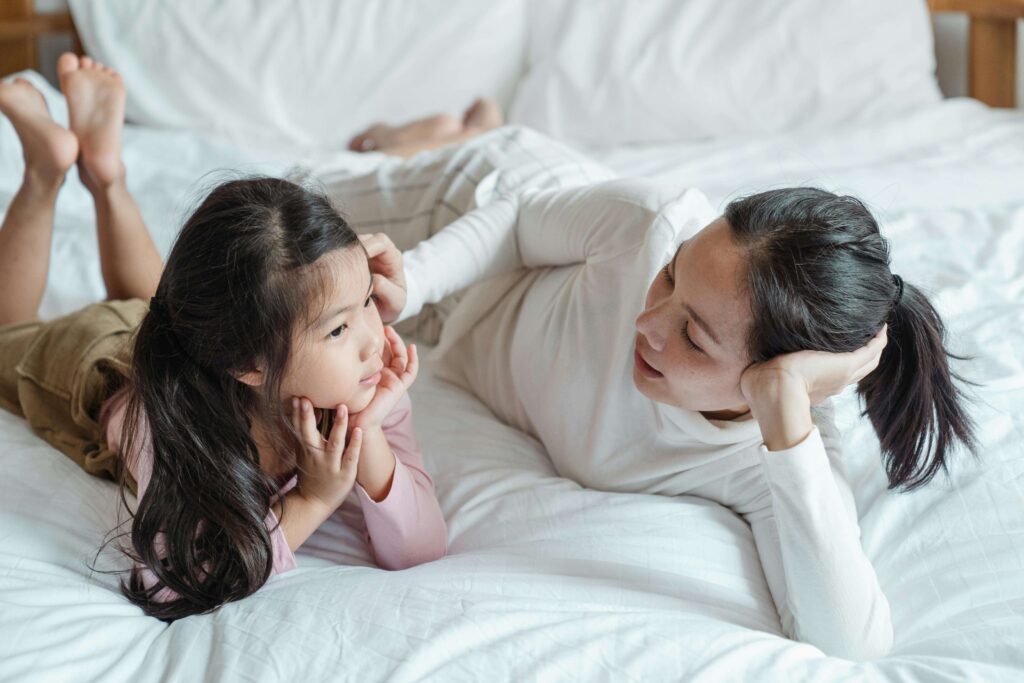
Creating an Emotionally Safe Home
Teaching kids about emotions is not about having all the right language. It is about creating a home where feelings can exist without fear, where vulnerability does not threaten connection, and where boundaries provide safety rather than distance. It begins with us noticing our own triggers, tending to our own nervous systems, and choosing response over reaction.
Children raised in that environment grow into adults who can tolerate closeness without losing themselves. They can set boundaries without guilt. Can feel anger without destruction and sadness without shame. They understand that intimacy and autonomy are not opposites but partners.
The emotional culture of a home becomes the emotional blueprint of a child. If we want our children to handle their feelings well, we must be willing to handle ours with honesty, responsibility, and care. In doing so, we are not just teaching them about emotions. We are teaching them how to love, how to connect, and how to remain steady within themselves, no matter what they feel.
How Can Relationship Therapy Help Parents Model Emotional Regulation?
Many parents understand the importance of modeling emotional regulation, yet find it difficult to practice consistently in the stress of daily life. Parenting often activates our own unresolved experiences from childhood. A child’s tantrum, defiance, or sadness can unexpectedly trigger feelings of helplessness, frustration, or shame that have little to do with the moment itself.
This is where therapy can be deeply supportive. Individual therapy or parent-focused counseling creates a space where adults can explore their own emotional patterns and reactions. Parents begin to understand what activates them, what emotional experiences they may have learned to suppress, and how their own upbringing shaped their responses to conflict, vulnerability, and boundaries.
When parents develop greater awareness of their internal world, they gain more choice in how they respond to their children. Instead of reacting from old emotional patterns, they can pause, regulate, and respond intentionally. Therapy helps strengthen the capacity to tolerate a child’s big emotions without becoming overwhelmed by them.
Strengthening the Emotional Foundation of the Family
Family and relationship therapy can also help parents align their approach to emotional modeling. When caregivers share a common understanding of emotional regulation, vulnerability, and boundaries, the home environment becomes more predictable and emotionally secure for children.
In this way, therapy is not about fixing parents or children. It is about strengthening the emotional foundation of the family. As parents grow in their own self-awareness and regulation, they naturally create the kind of emotional climate where children feel safe to experience, express, and understand their own inner world.
Begin Modeling the Emotional Safety Your Family Deserves
At Therapy Ties, our relationship therapists understand that parenting activates old wounds and unresolved patterns that can make emotional regulation feel impossible in the moment. We work with parents individually and with families to explore what triggers reactive responses, strengthen self-awareness, and develop the capacity to stay grounded when children’s big feelings arise. Through compassionate, curiosity-driven therapy, you can break cycles that no longer serve your family and create an emotional climate where both you and your children feel safe to express, repair, and connect authentically.
Ready to Model Emotional Regulation for Your Children? Start Relationship Therapy in Los Angeles, CA
If your child’s big feelings trigger overwhelming reactions you can’t control, you don’t have to keep struggling alone. Relationship therapy in Los Angeles, CA helps you understand what activates you, regulate your own emotions, and create the emotional safety your children need to thrive. At Therapy Ties, we support parents in healing their own patterns so they can show up grounded, present, and intentional for the families they’re building. Get started in three simple steps:
- Schedule a free 15-minute consultation to explore relationship therapy in Los Angeles, CA, and see if parent-focused support is right for you.
- Work with a relationship therapist to understand your triggers and develop tools to regulate emotions and respond with intention.
- Begin modeling emotional safety, repairing reactivity, and creating the grounded home your family deserves.
Additional Services Offered at Therapy Ties in Los Angeles, CA
At Therapy Ties, I help parents understand their emotional triggers and develop the regulation needed to create emotional safety at home. Through relationship therapy in Los Angeles, CA, clients explore what activates them, heal reactive patterns, and learn to model the vulnerability, boundaries, and repair that shape their children’s emotional future. I also offer individual therapy, couples therapy, and anger management for clients in Woodland Hills, West Hills, Agoura Hills, Encino, Tarzana, Sherman Oaks, North Hollywood, and throughout the greater Valley—providing a compassionate space to break cycles, strengthen self-awareness, and build the emotionally grounded family you envision.
About The Author
Hi, I’m Liron, a Licensed Marriage and Family Therapist and the founder of Therapy Ties in Woodland Hills. I specialize in helping parents understand how their own emotional patterns impact their children and their families. My approach is relational and focused on uncovering what drives reactivity—whether it’s childhood experiences, unresolved triggers, inconsistent boundaries, or the overwhelming demands of parenting.
I integrate Humanistic therapy, Emotion-Focused Therapy, Gestalt, and Family Systems to help parents explore their emotional responses, strengthen regulation, and build the self-awareness necessary for creating emotionally safe homes. I hold a Master’s in Marriage and Family Therapy from Phillips Graduate Institute and a BA in Psychology from UCLA. As a CAMS III–certified anger management specialist, I also support parents in managing intense emotions and shifting reactive behaviors that can disrupt family connections.
Fluent in both Hebrew and English, I work with clients throughout the Valley who are ready to break cycles, model healthy emotional habits, and raise children who feel safe expressing their inner worlds.