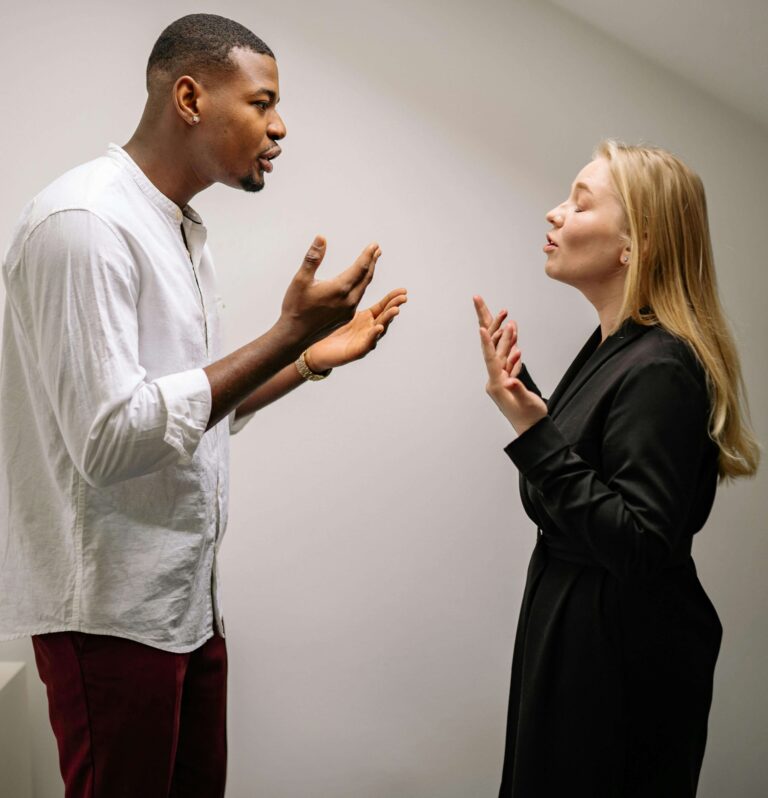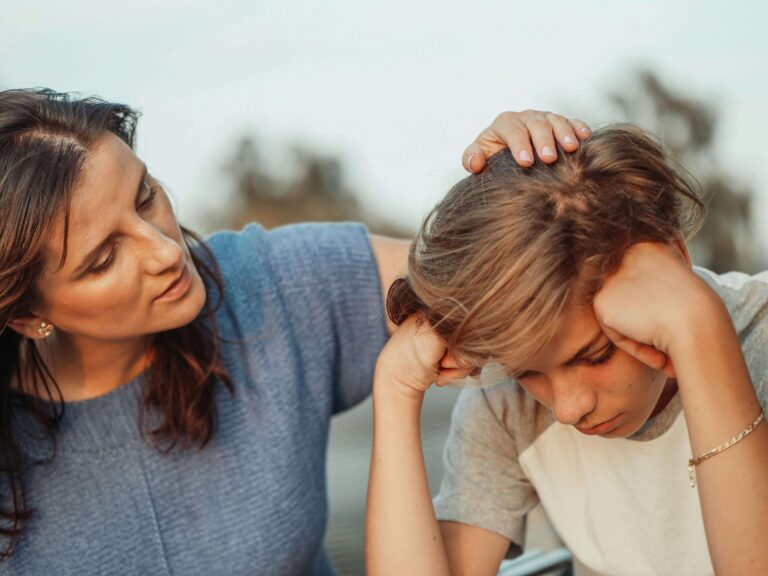
In many relationships, anger becomes the loudest voice in the room. It shows up quickly and forcefully during conflict. A partner raises their tone. A door closes harder than necessary. Words become sharper than intended. From the outside, it can look like the problem in the relationship is anger itself. But in relationship therapy in Los Angeles, CA, we often discover something different.
But very often, anger is not the true emotion at the center of the conflict.
Anger is frequently a protector. Beneath it, there is usually something much more vulnerable — hurt, fear, rejection, loneliness, or shame. Anger is simply the emotion that feels strong enough to stand guard over those deeper feelings.
In intimate relationships, where emotional exposure is high, this protective function of anger becomes especially common.
Why Anger Feels Safer Than Hurt
Most people did not grow up learning how to express emotional pain openly. Many were taught, directly or indirectly, that vulnerability was risky. Crying might have been dismissed. Needs may have been ignored. Sensitivity may have been labeled as a weakness.
Over time, the nervous system adapts.
Instead of expressing hurt directly — “I felt rejected when you dismissed me” — the mind quickly converts the experience into anger: “You never listen to me.” Anger provides a sense of control. It creates distance from the original pain. It allows a person to feel powerful rather than exposed. But while anger can protect us internally, it often creates disconnection externally. The partner on the receiving end usually hears criticism or attack rather than the pain underneath.
Instead of responding with empathy, they become defensive. And the cycle begins.
What’s the Cycle Couples Get Stuck In?
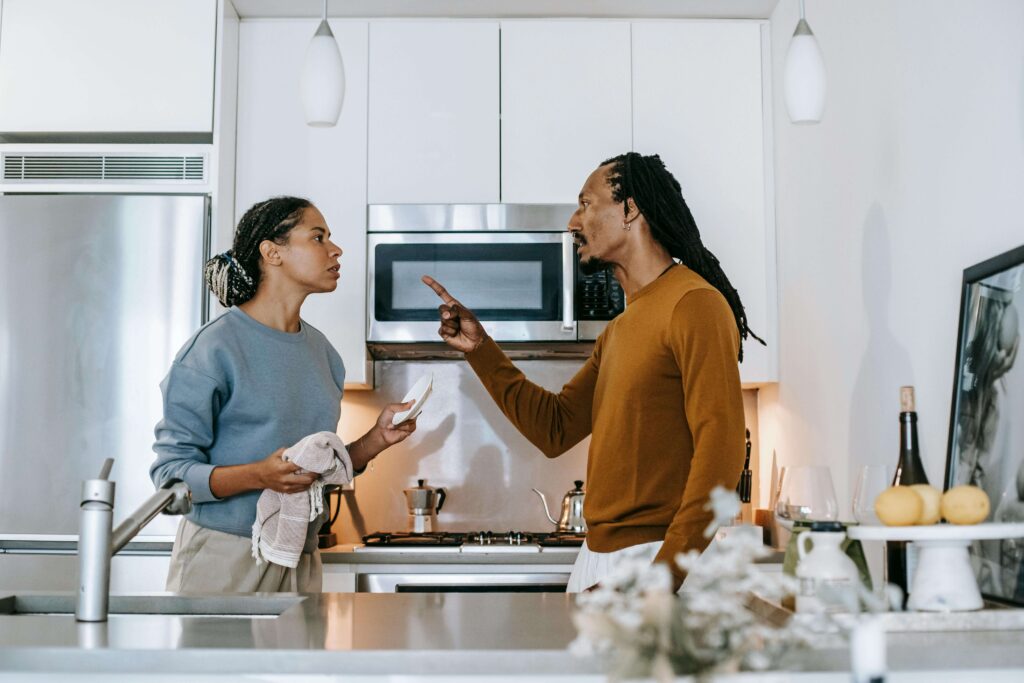
Many couples do not realize that their arguments follow the same predictable emotional pattern. One partner feels hurt or unseen. That vulnerability quickly transforms into anger. The anger is expressed through criticism, frustration, or accusation.
The other partner experiences this anger as an attack. Their nervous system shifts into defense — explaining, shutting down, counterattacking, or withdrawing. Now both partners feel misunderstood.
The original hurt never gets addressed because the conversation has become about defending against anger instead of understanding pain. Over time, these cycles become automatic. The brain begins to anticipate a threat the moment tension appears. Conversations escalate faster, and repair becomes more difficult.
What started as a small moment of hurt becomes a recurring pattern of conflict. Neither partner actually wants the distance that forms between them, yet both feel trapped inside the reaction.
What’s Really Happening Beneath the Conflict?
If we slow down enough to look beneath anger, the emotional landscape often changes completely.
The partner who sounds furious may actually be saying, internally, “I feel unimportant to you.”
The partner who withdraws during conflict may actually be feeling, “I’m scared I’ll never get this right.”
Underneath anger are the emotions that make us human — the need to feel valued, understood, respected, and emotionally safe.
The difficulty is that these emotions require vulnerability to express. And vulnerability feels risky when a relationship already feels tense. So anger continues doing its protective job. Unfortunately, protection without connection leaves both partners feeling alone.
When Anger Becomes a Habit
The more often anger is used to communicate pain, the more automatic it becomes. Eventually, partners stop hearing the underlying emotion altogether. They begin to see each other through a narrow lens.
One becomes “the angry one.” The other becomes “the avoider.”
These labels can feel permanent, even though they are often just roles created by a reactive pattern.
When couples begin to understand that anger is often a signal rather than the core emotion, something important shifts. The goal of the conversation is no longer to win the argument. The goal becomes understanding the feeling underneath it.
That shift is where real intimacy begins.
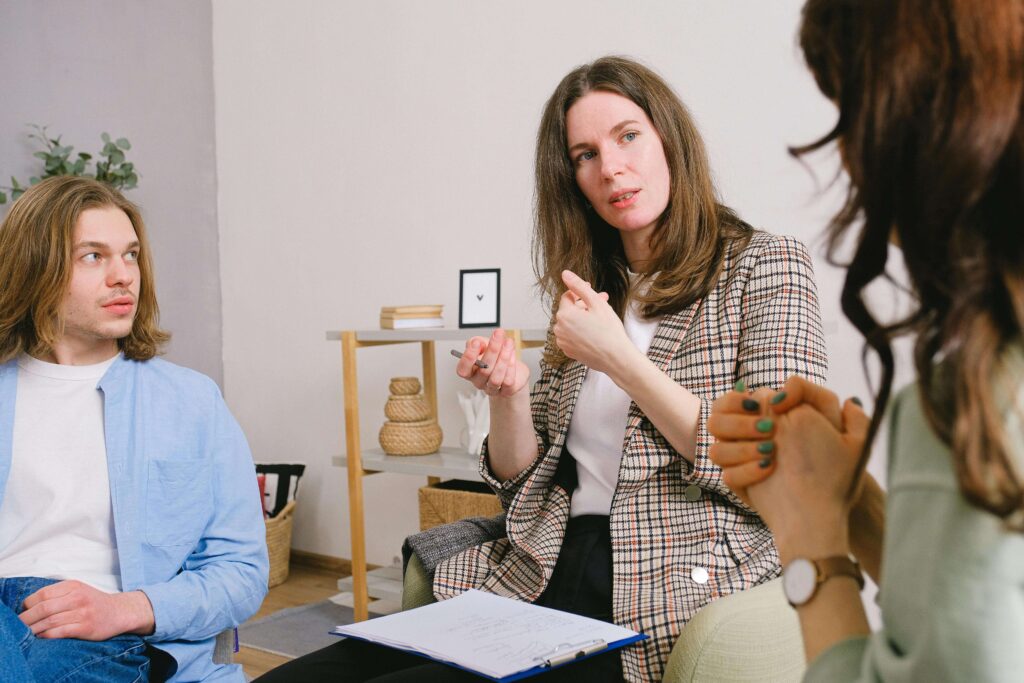
How Can Relationship Therapy Break the Cycle?
Relationship therapy can be especially powerful for couples stuck in anger-based conflict cycles because it slows down interactions that normally escalate too quickly.
In the safety of a therapeutic space, a skilled relationship therapist in Los Angeles, CA can help partners move beneath the surface-level argument and explore the emotions driving it. What initially appears to be anger is often gently unpacked to reveal the hurt, fear, or longing underneath.
When a partner who usually sounds critical begins to say, “I felt really hurt when that happened,” the emotional tone of the conversation changes. The partner who previously felt attacked can finally see the vulnerability that was hidden beneath the anger.
Recognizing the Pattern Together
Therapy also helps couples recognize their reactive cycle as a shared pattern rather than a personal failure. Instead of seeing each other as the problem, partners begin to see the cycle itself as the thing they are working against together.
This shift reduces blame and increases collaboration.
Over time, couples learn new ways of communicating emotional pain before it turns into anger. They practice slowing down reactions, naming feelings more directly, and responding to vulnerability with curiosity instead of defensiveness.
The work is not about eliminating anger altogether. Anger is a natural emotion. The goal is to understand what the anger is protecting and to create enough emotional safety in the relationship for the deeper feelings to be expressed.
When those deeper emotions are seen and received, conflict begins to transform. Arguments become conversations. Defensiveness becomes understanding. Distance becomes connection.
The Courage Beneath Vulnerability
Expressing hurt directly requires courage. It asks us to risk being seen in a moment when we might rather protect ourselves.
But when couples learn to speak from that deeper place, relationships often soften in ways that feel surprising. The partner who once seemed angry may actually be longing for reassurance. The partner who seemed distant may actually be overwhelmed by fear of failure.
When those truths are spoken, the emotional distance between partners begins to shrink. Anger may still appear at times; it is part of being human, but it no longer has to carry the entire emotional conversation. Underneath anger is often a simple and deeply human message:
“I care about this relationship enough to feel hurt.”
When couples learn to hear that message, conflict stops being a threat to the relationship and becomes an opportunity to understand each other more deeply. And in that understanding, real healing begins. Find support breaking the cycle and expressing your hurt with the support of Therapy Ties.

Ready to Break the Cycle and Understand What’s Beneath the Anger? Start Relationship Therapy in Los Angeles, CA
If anger has become the loudest voice in your relationship and you’re tired of the same fights leading nowhere, help is available. Relationship therapy in Los Angeles, CA helps you slow down reactive patterns, uncover the hurt beneath the anger, and communicate vulnerability before it escalates into conflict. At Therapy Ties, we create a safe space where both partners can explore what anger is protecting and build the emotional safety needed for real understanding and lasting connection. Get started in three simple steps:
- Schedule a free 15-minute consultation to explore relationship therapy in Los Angeles, CA, and learn how to break reactive anger cycles.
- Work with a supportive relationship therapist to uncover the hurt beneath anger and communicate vulnerability before conflict escalates.
- Begin understanding what your anger is protecting so you can express pain directly and create a genuine emotional connection.
Additional Services Offered at Therapy Ties in Los Angeles, CA
At Therapy Ties, I help couples break reactive anger cycles and uncover the vulnerable emotions beneath conflict. Through relationship therapy in Los Angeles, CA, clients learn to recognize when anger is protecting hurt, slow down escalating patterns, and express pain directly so it can be heard and understood. I also offer individual therapy, couples therapy, and anger management for clients in Woodland Hills, West Hills, Agoura Hills, Encino, Tarzana, Sherman Oaks, North Hollywood, and throughout the greater Valley—providing a compassionate space to transform anger into connection and create the emotional safety intimacy requires.
About The Author
Hi, I’m Liron, a Licensed Marriage and Family Therapist and the founder of Therapy Ties in Woodland Hills. I specialize in helping couples understand the emotions beneath anger and break the reactive cycles that keep them stuck in conflict. My approach is relational and centered on uncovering what anger is protecting—whether it’s hurt, fear of abandonment, shame, or unmet needs for connection and safety.
I integrate Humanistic therapy, Emotion-Focused Therapy, Gestalt, and Family Systems to help couples slow down escalating interactions, identify vulnerable emotions hiding beneath defensiveness, and create the emotional safety needed to express pain without attack or withdrawal. I hold a Master’s in Marriage and Family Therapy from Phillips Graduate Institute and a BA in Psychology from UCLA. As a CAMS III–certified anger management specialist, I support clients in transforming anger from a barrier into a signal that can deepen understanding and intimacy.
Fluent in both Hebrew and English, I work with clients throughout the Valley who are ready to stop fighting the same fights and start healing the hurt underneath them.